Deepwater Ambition
A vision of the future
The year is 2027. The month is October.
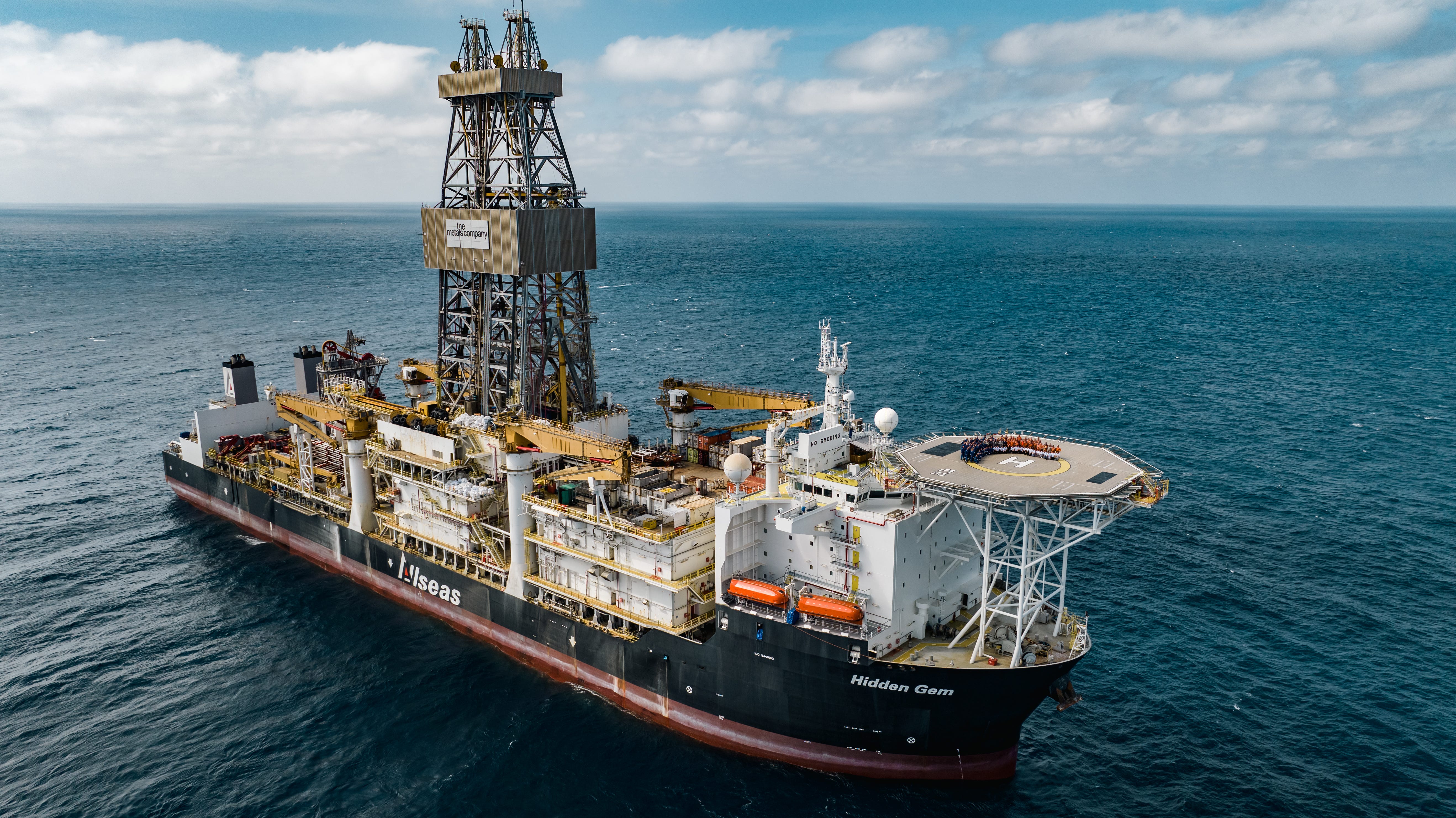
A large ship floats in the remote Pacific. No land is in sight. The view is blue upon blue.
On the ship, amid a cacophony of technology, sits a machine. It is big and wide and squat, with metal tracks to crawl upon. Like a tank, but sleeker.
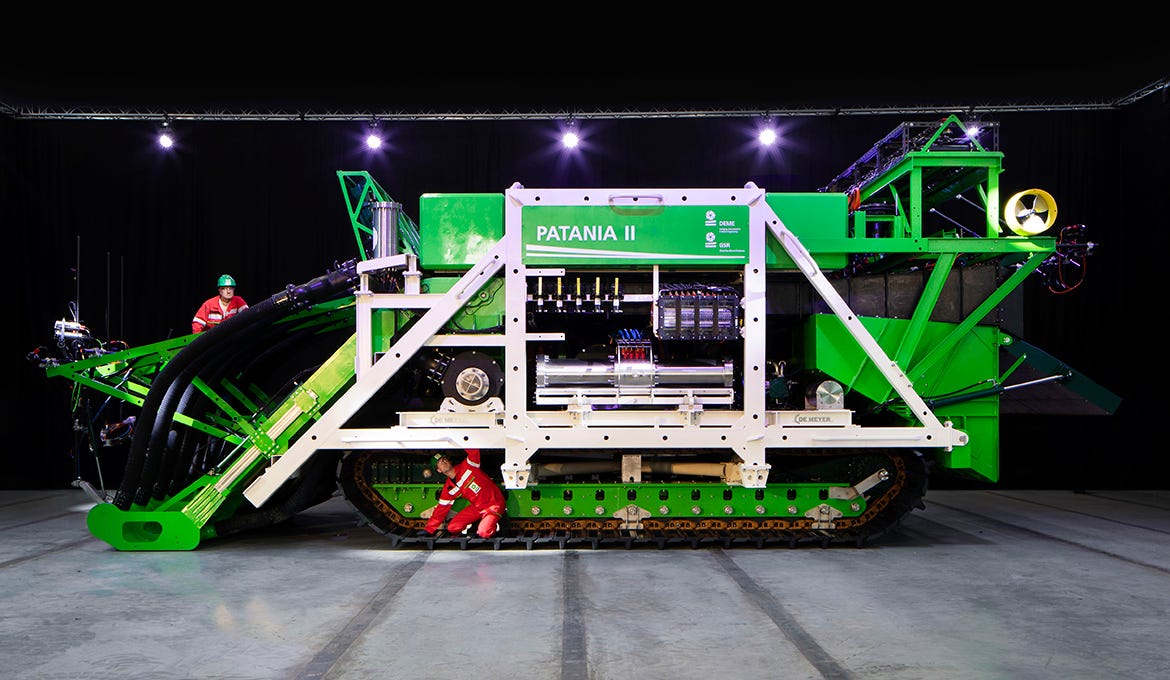
The machine is raised into the air, dangling from a cable. It is then lowered slowly over the side of the ship, into the sea. Still tethered to the ship, it descends through layers of darkening seawater, sinking from blue to black, to the abyssal plains deep below.
It lands in soft sediment, raising a small cloud of dust. A pipe is lowered from the ship and attached to the machine’s back. The pipe is 4.5 kilometers, or close to 3 miles, long. That’s how long it needs to be to reach the machine now sitting on the seafloor.
This machine begins to move. It is massive, some 15 meters, or nearly 50 feet, wide. Yet it’s also lightweight, surprisingly buoyant. Its broad tracks traverse the soft seabed without sinking deep into it. An operator controls it remotely from the ship above.
The machine maneuvers around a smattering of extinct volcanoes, aiming for flat areas. Shallow impressions of its tracks stretch behind it, marking its passage.
Here, on the gently sloping seafloor, it encounters the fields of metallic rocks it was designed to collect.
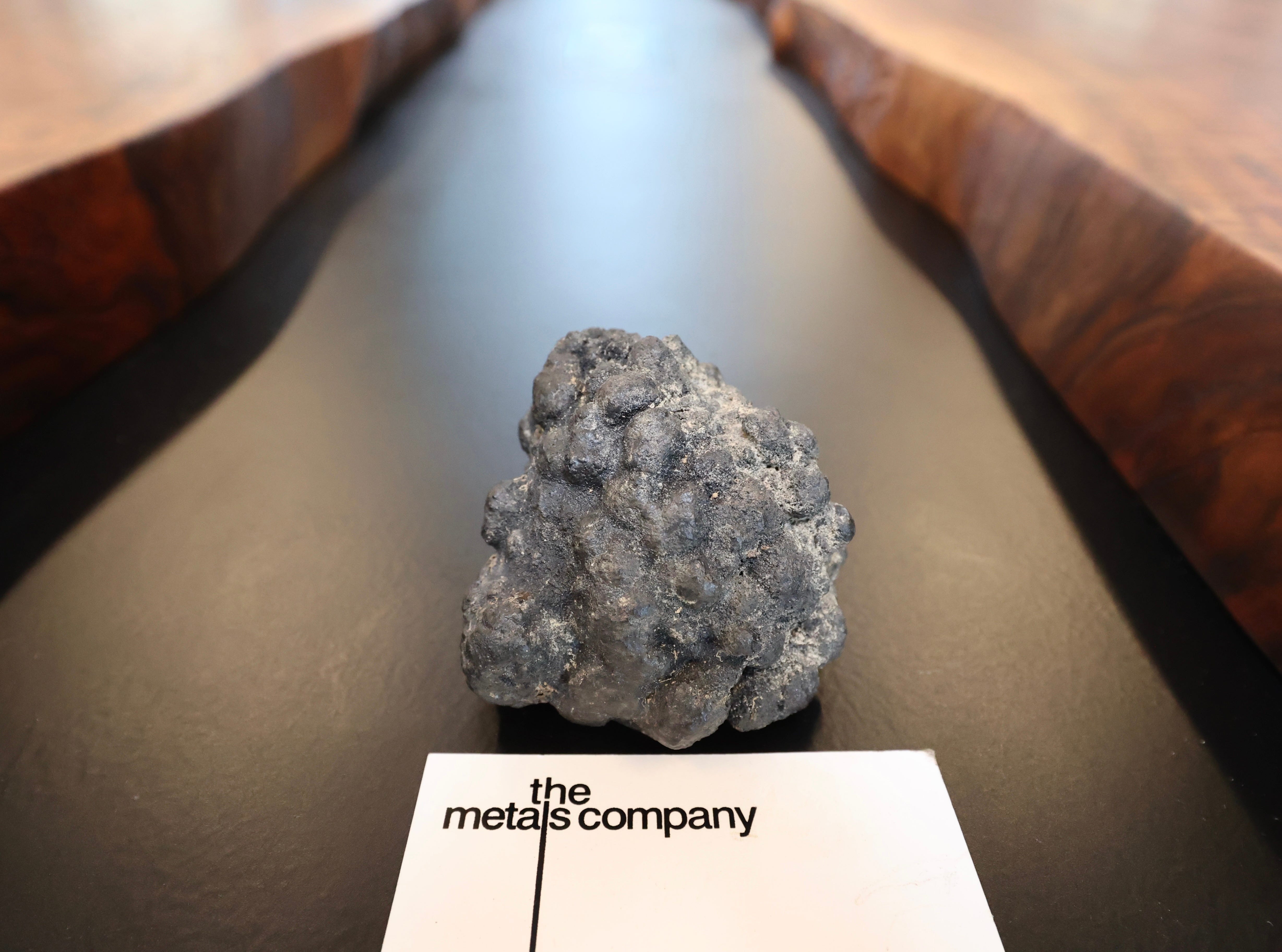
The metallic rocks contain cobalt, copper, nickel, and manganese. These metals were once contained in mountains on Earth’s surface, and in magma deep within Earth’s crust. They dissolved into seawater gradually, through volcanic activity and the erosion of mountains. Then, millions of years ago, bits of the dissolved metals began to stick to pebbles, shark teeth, and other small hard objects sitting on the seabed. The layers of metals grew, millimeter by millimeter, until they formed lumpy black rocks.
The mining machine sucks these ancient rocks up, lightly and quickly, through its nozzle. The rocks have sat still for millions of years, but now they’re entering a journey of motion, of change. They clatter upwards through the very long pipe to the ship at the top.
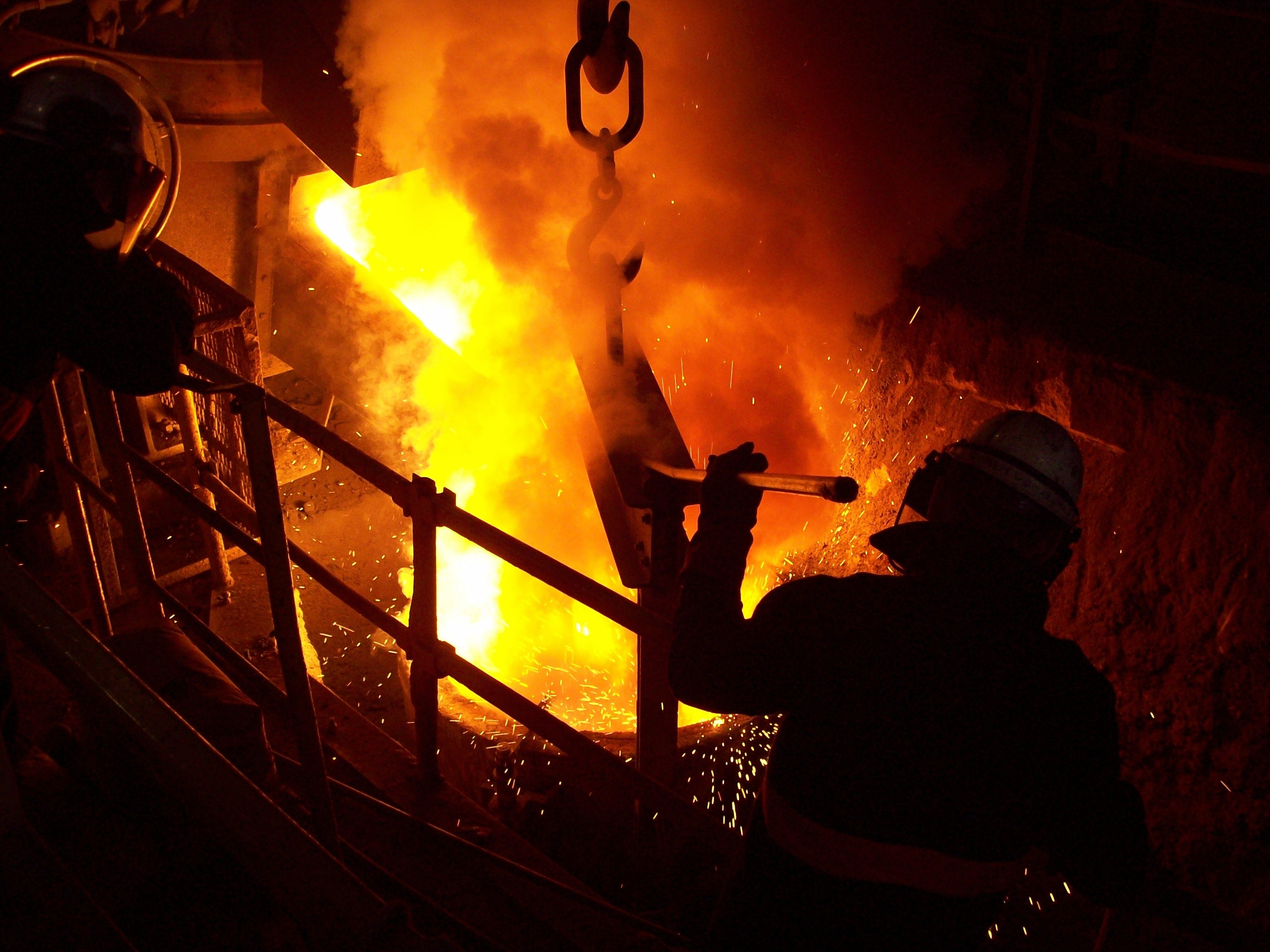
There, the rocks are cleaned of seawater and lingering seafloor sediment. They’re transferred to another ship and taken to processing facilities in Japan and Indonesia, to be melted down into liquid, hot and orange as lava.
The Metals Company (TMC) refers to this plan as Project Zero: the world’s first full-scale deep sea mining endeavor.
The metallic liquid will ultimately be separated into different metals, each with different technological or industrial uses. Processing metal is hot and dangerous, but those who specialize in it have got it down to an art.
These metals from the deep sea can be used in batteries, and to make steel. They will become robots, weapons, buildings, cars. They will become “technium”: part of the ever-growing collection of technology that defines modernity.
Nearly every bit of metal will be sold by TMC. Even the byproduct left after processing can be used in construction. Maximizing profit, minimizing waste.
Three years later, TMC will launch a second mining machine from the same ship. It crawls along on the seafloor beside the first machine, both tethered to the ship above, gathering metallic rocks even faster.
In the following years, additional ships are added to increase the payload, each operating two mining machines deep below.
A larger transfer fleet is deployed to collect the vast caches of metallic rocks and ferry them to shore. TMC builds its own metal refining facilities in Texas, along the US Gulf Coast. The transfer vessels journey through the Panama Canal to bring the rocks there. The new refineries are sleek, gleaming, modern. The buildings look like abstract sculptures. They have bike paths outside.
In 2037, 10 years into this first mining project, TMC will launch a second mine, on a second area of remote Pacific seabed. More ships, each carrying multiple mining machines, set out to fill with metallic rocks. The first mine will operate for 19 years, the second for 23 years.
These mines will become two of many, as other companies launch their own deep sea mining operations. But TMC will be remembered as the first, the pioneers.
TMC will own the metals the US refineries produce, renting them to myriad users, controlling a supply for jets, drones, missiles, cables, computers. The metals end up in mechanical humanoids that do laundry; in vehicles that drive themselves; in refrigerators that tell you what recipes to try. The metals grow the economy. People use them without ever thinking of the deep sea.
The metals will also be recycled, endlessly. Because TMC now rents metals instead of selling them, renters are required to return old products to recycling facilities. TMC calls it “a world where metals move through the technium like nutrients through a living system – used, recovered, reused again and again.”
This is the ambitious vision laid out in 2025 by TMC, the world’s largest prospective deep sea mining company.
Much of this vision appeared in two economic studies TMC published last year. One, a pre-feasibility study, details TMC’s plans for the first operational mine. The other, an initial assessment, outlines possibilities for TMC’s other planned mining areas. Further futuristic concepts were shared in the company’s 2025 presentations.
The future TMC has envisioned is far from guaranteed. No one has yet mined the deep sea at commercial scale. The company still needs permits, funding, and equipment to get started.
So, the two economic studies (both dry and technical documents, in spite of the sci fi vision they suggest) are meant to assist TMC in moving forward.
The pre-feasibility study, for example, formally declares 51 million tonnes of “probable mineral reserves” in TMC’s initial planned mining area. (The metals of the deep sea are generally considered minerals.) Mineral reserves are the profitable parts of a mineral deposit: their value is higher than the cost of mining and processing them. Probable means the reserves have some demonstrated value, but aren’t yet the final estimate.
By publishing a study that declares mineral reserves – thus claiming access to a profitable resource – TMC has checked a box that’s standard for the mining industry, meant to help prove a mining project’s viability and attract investors. No deep sea miner has ever declared reserves before.
TMC’s studies were written and overseen by mining industry experts known formally as “qualified persons”. Several of these qualified persons are employed by TMC itself. Others come from other organizations: consulting firms, subsea technology companies.
Yet the studies have drawn criticism for using TMC employees as authors. “If you rely on company insiders to make assertions about their own deposits, there’s a tremendous risk of bias or omissions,” noted Lyle Trytten, a metal mining and processing expert, in a podcast last year that touched on TMC’s plans. He went on: “It might all be fine, but without an independent expert signing off, it’s less certain.”
Similar criticism appeared in a report by Iceberg Research, a firm that critiques publicly-traded companies (those which sell stock to the public). “Notably, two key sections, the metal prices assumptions and the cost estimates, were prepared by TMC employees,” reads the report. “Although permissible, this significantly undermines the credibility of the [pre-feasibility study].”
Iceberg adds that other “qualified persons” come from very small firms, including a sole proprietorship that appears to have TMC as one of its only clients. Deep sea mining is a small world, and it seems difficult to find truly qualified persons who may not be biased.
Iceberg’s report further states that TMC’s calculations use metal prices higher than current ones, in order to make its plans appear profitable. In reality, it’s very hard to predict future metal prices.
The report also suggests that TMC may face legal problems, given that it plans to mine in international waters, but with permits only from the US.
While Trytten’s view seems more measured than Iceberg’s, he highlighted that TMC’s proposed costs and timeline may be unrealistic. From legal hurdles to technical difficulties, countless unforeseen issues could lay ahead. Mining projects are often slower and more expensive than a company’s optimistic plans.
Still, Trytten commended TMC on the work thus far: “We shouldn’t understate the importance of reaching a pre-feasibility study. That’s a significant achievement.”
What TMC’s trying to do in the short term – gather the paperwork, partnerships, and permissions necessary to start mining the deep sea – is interesting enough. But I’m also intrigued by how the company places deep sea mining into an elaborate vision of the future. Time will tell if this vision can be executed successfully. For now, it remains a work of fiction.
Last year, TMC’s Chief Financial Officer Craig Shesky spoke at an “Ask Me Anything” event. He said, “In the Eagles documentary, Joe Walsh talks about the fact that, you know, sometimes everything feels very chaotic in your life and it’s random events crashing together, and then you look back on it years down the road and it seems like a finely-crafted novel. That’s what’s happening with TMC.”
Loved the introduction to this article! Great setup!
beautifully written, although the content is quite tragic