Dust in the Water
What happens when mining machines kick up sediment?
One of the biggest environmental questions about deep sea mining is how sediment kicked up by mining machines might affect nearby life. A recent study takes a new step toward answering that question.
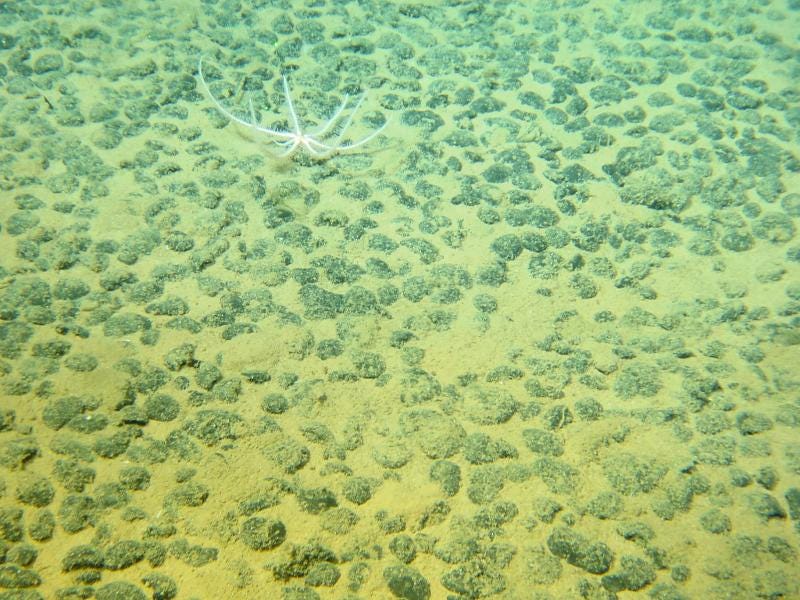
Researchers tracked the sediment at a deep sea mining test site, in a field of polymetallic nodules (the mineral-rich rocks many deep sea miners seek). This sediment acted a bit like dust behind a truck on a country road, trailing behind the mining machine and landing some ways away.
The researchers found that most of it landed near the mining machine, while small amounts traveled more than four kilometers away.
Their study didn’t look at impacts on life – only where the sediment might end up. But this will help inform future studies on what that dust might do to the deep sea life it lands on.
The researchers also found that after the mining machine passed through, there was 10,000 times more floating sediment in the water than usual. But these levels returned to normal after 14 hours. Most of the deep sea dust quickly resettled on the seafloor, leaving a thick coating on top of nearby nodules. Only a small amount of very-fine particles traveled multiple kilometers away.
Like so many deep sea mining-related issues, the sediment questions are incredibly hard to answer. How much deep sea sediment is kicked up, and where it goes, depends on the equipment being used, and the ecosystem being mined (as well as other factors, like water currents). How this sediment affects nearby life depends on what lives there, and whether those animals are used to changes in their environment.
This recent study looked at the mostly-flat Clarion-Clipperton Zone, a section of the Pacific seabed where polymetallic nodules abound.
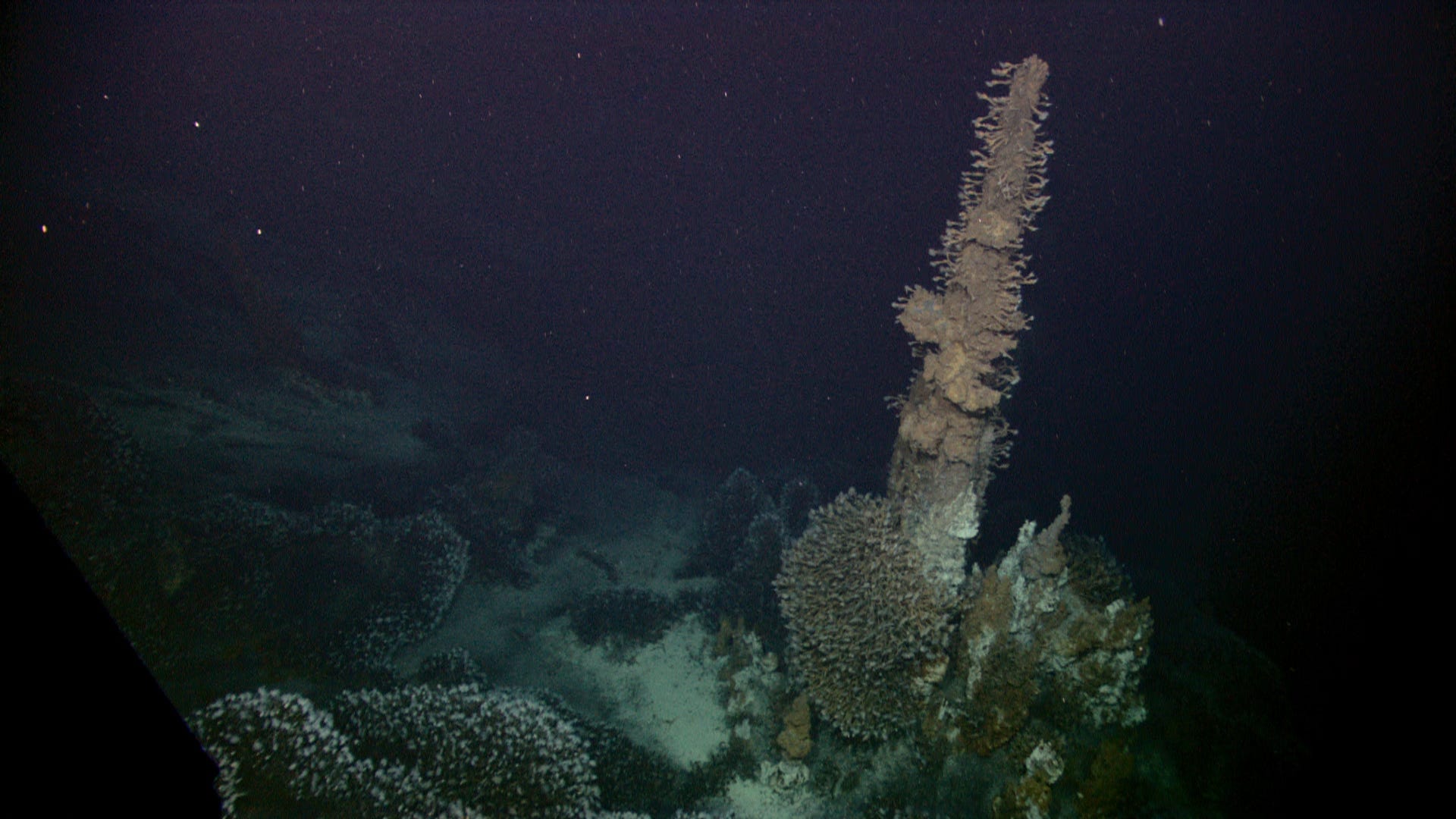
But there are also other ecosystems on the table for mining: hydrothermal vents and seamounts. There, mining machines would dismantle the mineral-rich formations, leaving bits of metals and minerals floating in the water. This very different kind of sediment would likely have different impacts on nearby life.
So, each type of ecosystem needs its own sediment studies, and lots of them, to figure out how nearby deep sea life might fare if mining moves ahead.