For Science
The deep sea under a microscope
I always want to go back to school when September arrives, like some sort of migratory instinct is drawing me toward campus. But being a forever-student isn’t a practical way to live (especially with US college costs these days). So I satisfy myself with other types of learning. Luckily, working as a journalist offers plenty of chances for that.
Reading new scientific studies is one path to that back-to-school feeling. I read them often for work, but also for my own curiosity. Without a scientific background, I never understand all the technical details, but it’s still a pleasure to delve in and try to parse out what they’re saying.
Here’s an interesting one I saw recently: researchers found that a certain type of bacteria “may play a significant role in the formation and growth of polymetallic nodules.” The nodules form from metals in seawater over millions of years, and deep sea miners want to sell those metals, which come in such a convenient rock-like shape. But we’re not yet sure exactly how and why polymetallic nodules form, or why some seabeds have them and others don’t.
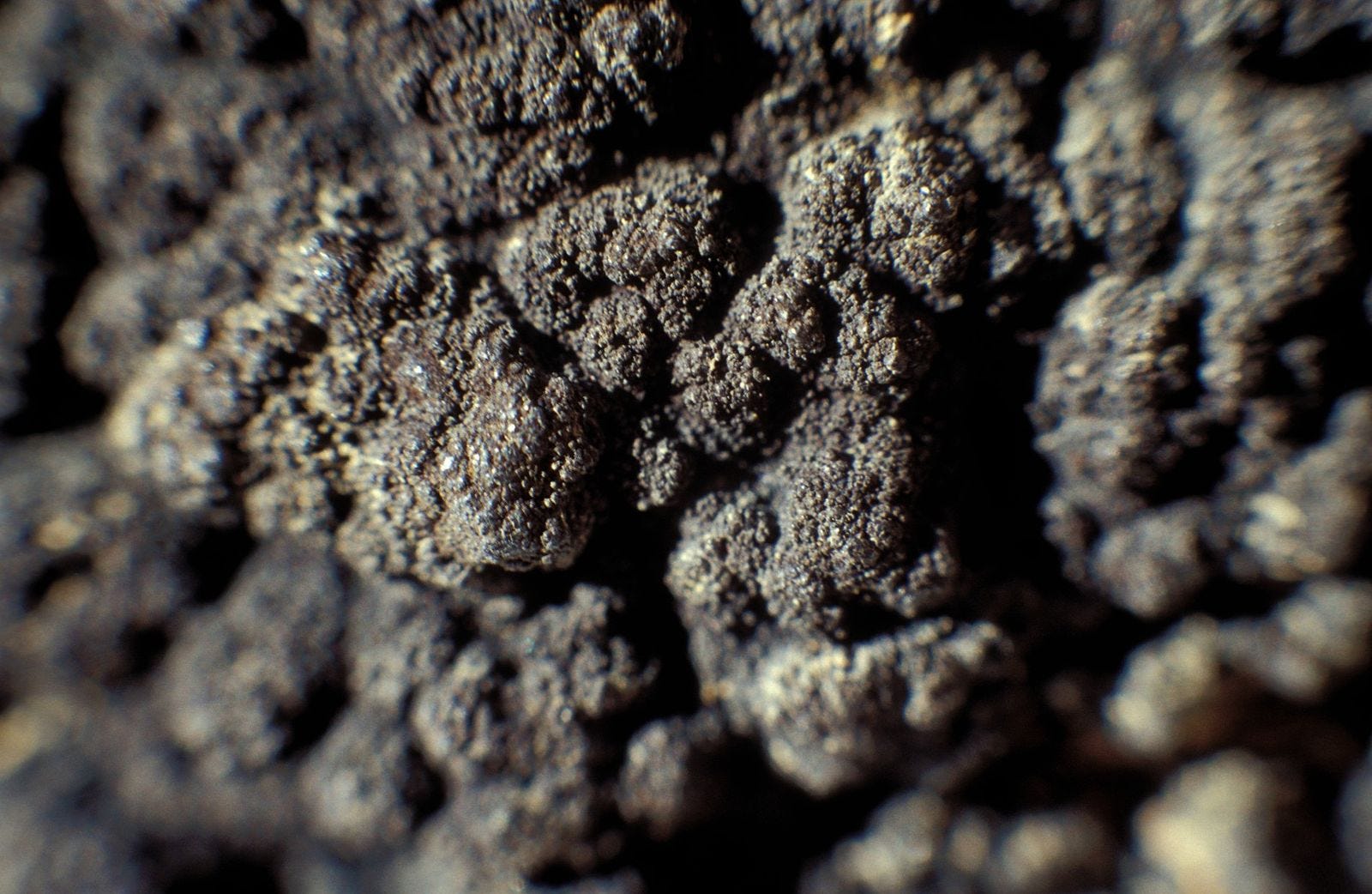

More research is needed to discover precisely what role the bacteria may play. But this study hints at an interesting partnership between organic life and inorganic materials. (A much-hyped study published earlier this summer, which suggests nodules produce life-sustaining oxygen, was another big hint.) With more research, scientists could further unveil the mysterious connections between these metallic rocks and the deep sea life around them.
Another recent study looked at life on inactive hydrothermal vents. Those vents are made of metals and minerals, and some countries, such as Norway, are exploring mining them. (It would be near-impossible to mine active vents, since they pump out super-heated water from Earth’s crust, but inactive vents are feasible targets.)
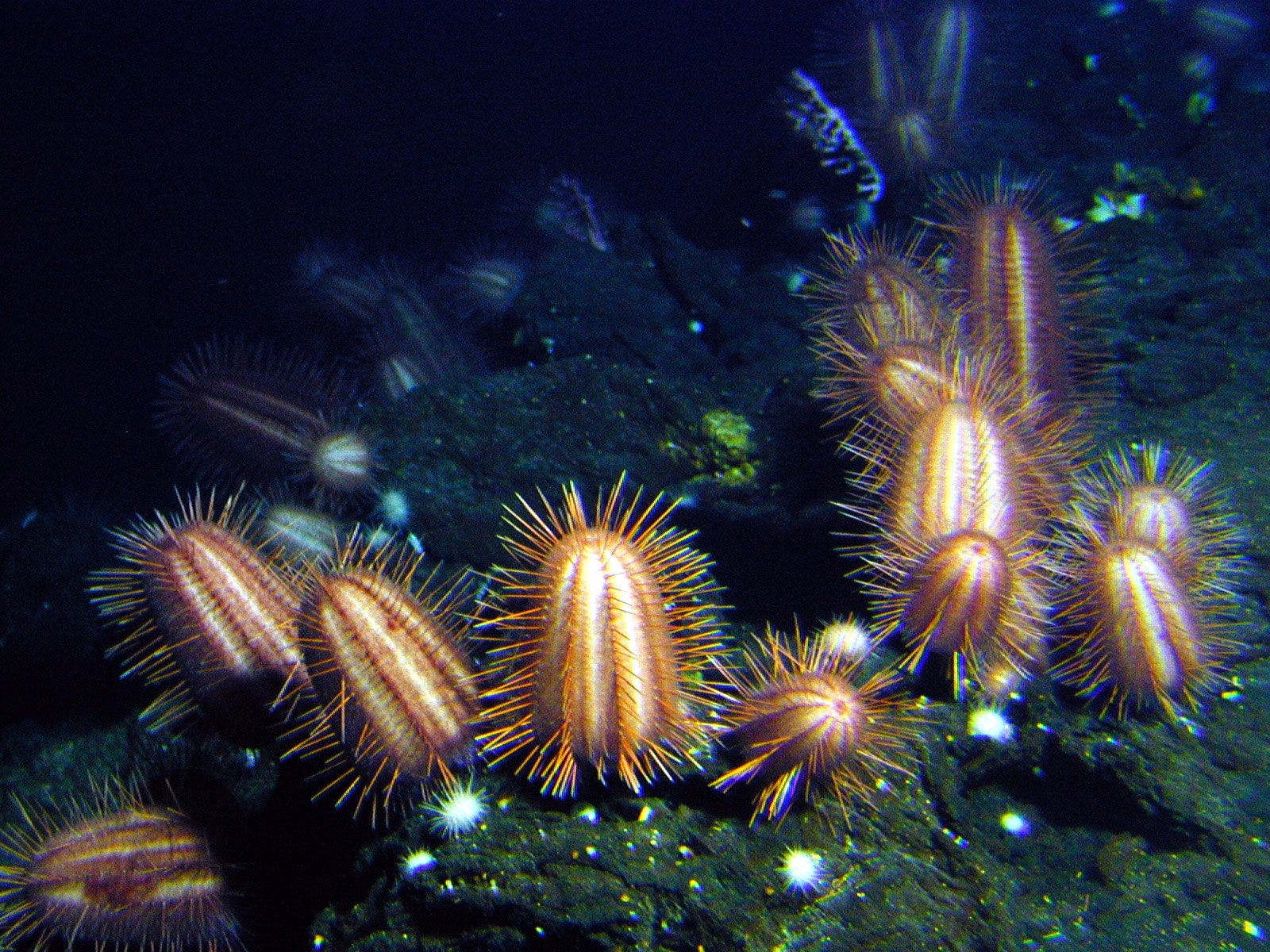
Since hydrothermal vents were only discovered in 1977, researching them at all is still pretty new. But scientists have been looking pretty closely at active vents since then, while inactive vents are less well-studied.
This study found different ecosystems on the inactive vents than on the nearby seafloor. That suggests that something about the cold vents – maybe their shape or mineral content – attracts certain types of life. The study also indicated that how the animals eat, such as whether they create currents to bring food closer or just wait for it to float by, impacts what part of the vents they live on.
The assumption that there’s less life, or less-interesting life, on inactive vents is one justification for mining them. Studies like these suggest that this assumption might not be entirely accurate. “Although our study region is not under consideration for deep-sea mining,” wrote the authors, “our findings support a growing call to highlight biodiversity in conservation management plans for inactive sulfide deposits.” There’s a lot left to learn about these cold vents, if we preserve them for future study.
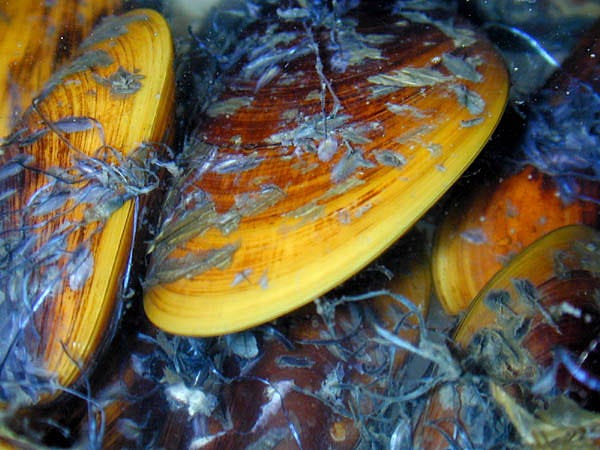

Another new study that caught my eye explored the possible impacts of mining’s sediment plumes on a vent-dwelling deep sea mussel species. The mussels didn’t fare well when subjected to sediment, which disrupts their natural filtration abilities. And since they’re a key vent species, harming the mussels appears likely to harm the entire ecosystem. Losing this one species leads “to a less resilient ecosystem, in the best scenario, or to the collapse of the hydrothermal vent ecosystem in the worst scenario,” the authors wrote.
Published studies like these often come from expeditions that offer more immediate excitement, too. Researchers at sea recently found a seamount that’s nearly two miles high: about four times the height of the tallest building on Earth, covered with thrilling life. Such voyages nearly always result in fantastic footage, newly-discovered species, and more studies to publish later on.
For all the scientific studies and news I read, I do have my reservations about Western science. Good science isn’t a panacea for solving big world problems. (If it was, human-caused climate change would’ve been fixed by now.) And there’s also a lot of bad science out there. The research tradition has long ignored or dismissed other forms of knowledge, like Indigenous environmental management that’s been honed over thousands of years. So I’m pro-science, but with hefty caveats.
Still, there’s a part of me that would’ve loved to be a scientist instead of a journalist: a biologist, in particular. I deeply admire many scientists I’ve met, especially the biologists. They show remarkable passion for the ecosystems and organisms they study, even those that may seem small or insignificant to other people. They’ll wax emotional over deepwater sponges or bacterial mats. They’ll spend hours explaining to me how a particular seaweed ecosystem functions. It’s always amazing to come close to such deep love for the natural world.
Even in the dry language of scientific studies, that passion can sometimes shine through. I keep coming back to learn from these studies, and I keep finding inspiration in them. There are people out there devoting entire careers to the microbes and mussels that might otherwise be forgotten. This back-to-school season is a good time to pause, recognize their work, and think about its greater implications.