New Eyes on the Deep
How deepwater industries are using AI
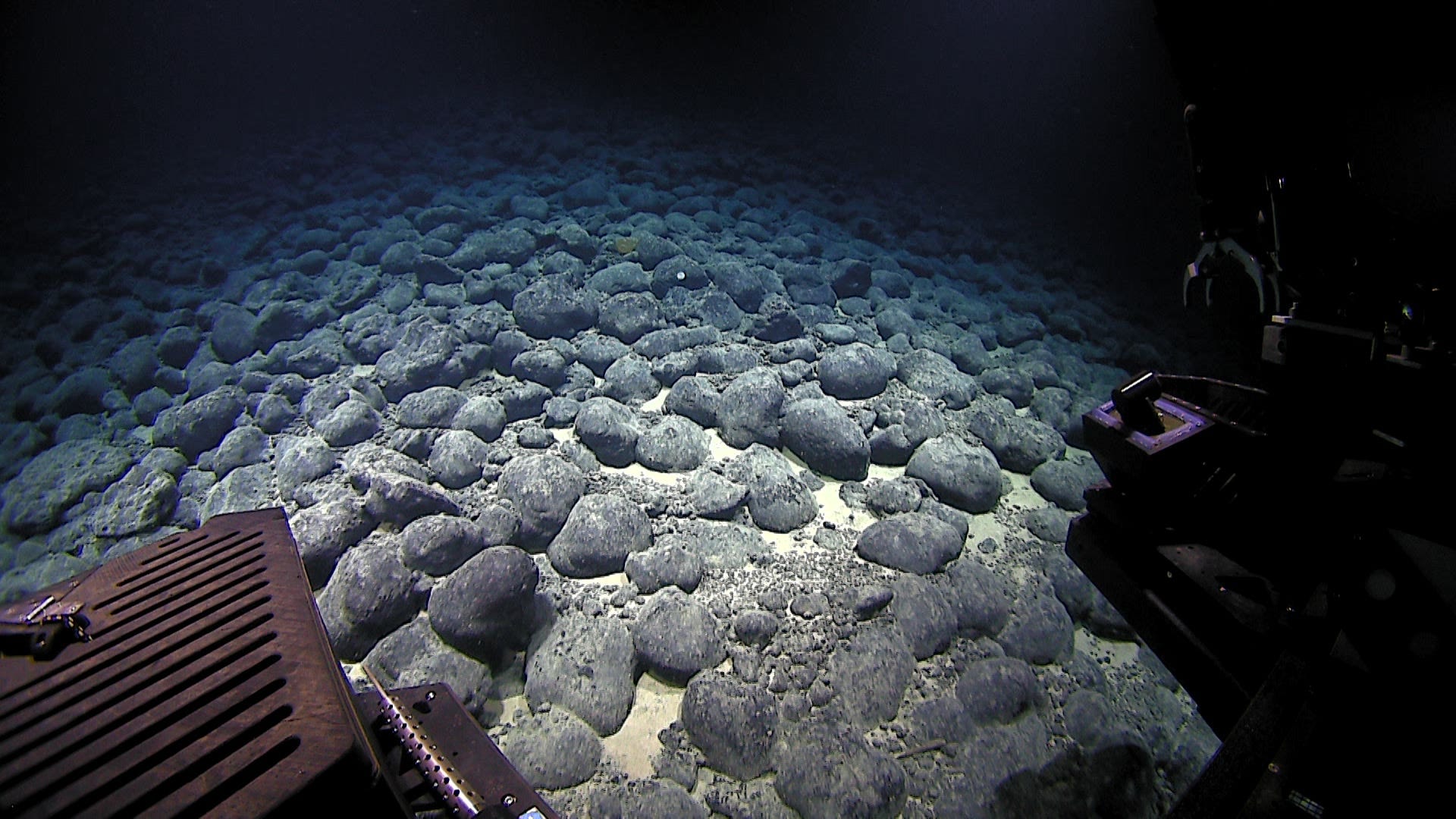
Last year, at the Deep Sea Minerals Conference in Bergen, Norway, one presentation in particular stood out to me.
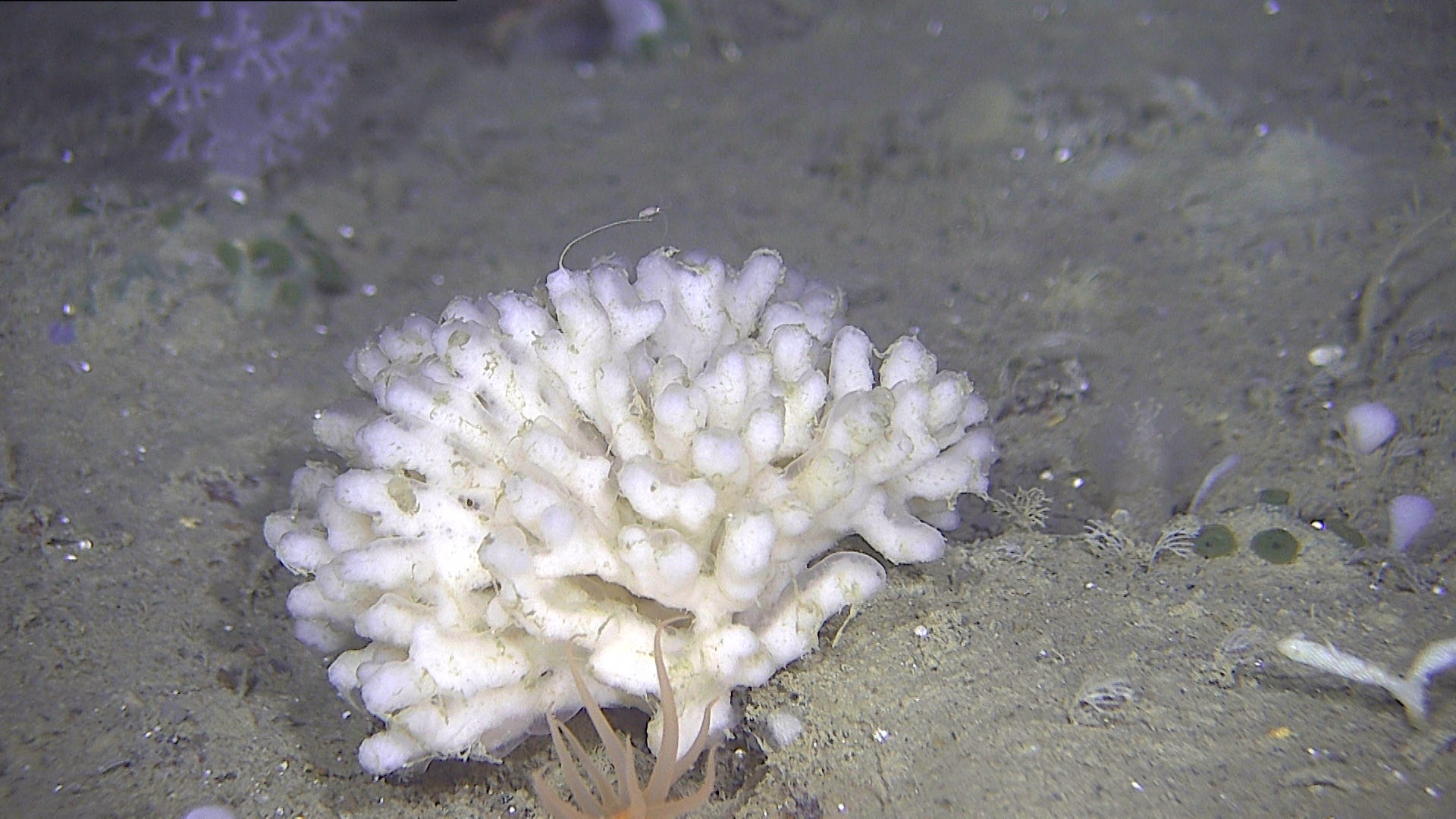
Dani Schmid, CEO of the resource-focused research company Bergwerk, showed the room video footage from a robot skimming over the deep seafloor. He highlighted a bushy white sponge, Lissodendoryx complicata, from the video.
Bergwerk’s scientists, he explained, had trained an AI model to recognize species like this one. Reviewing footage from deep-diving robots, the AI found that the sponge was actually more common than expected. It wasn’t rare; it just hadn’t been identified very often before. Here was a small hint of how AI could revolutionize our understanding of where life is found in the deep.
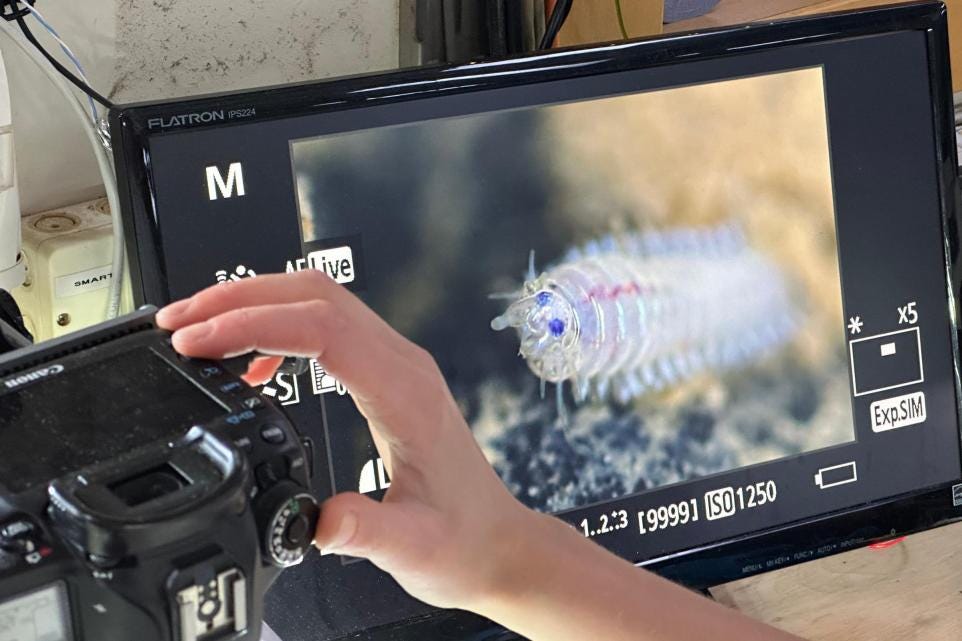
AI, it seems, is now everywhere. In some industries, like mine (journalism), it’s been shoved in rather forcefully and unwelcomely. (I personally don’t use it. But the terrible AI email replies autosuggested by Gmail frequently remind me that the technology can’t handle even basic elements of my job.)
Yet in other industries, like deep sea research, AI seems to have been welcomed with open arms.
This makes sense. As Bergwerk demonstrated, AI can vastly speed up some elements of deepwater research. The technology may not be able to comprehend an email thread. But it seems to decently categorize deep sea life in videos, which is rather more straightforward than the nuanced tasks of reading and writing. AI is probably at least as good at reviewing deepwater footage as an exhausted scientist who’s been watching that footage for hours. And many scientists seem glad to hand the task over.
In other cases, I’m reluctant to support handing AI the observation reins. On land, for example, there can be benefits to humans doing long, tedious, intimate observations of natural environments: a sense of connection, the potential of unexpected discoveries that AI isn’t trained for.
But for the deep sea, where human observation is necessarily filtered through layers of technology anyway, it makes some sense to let AI assist. Here, the AI isn’t replacing humans in the field. It’s replacing humans at a desk in front of a computer, reviewing videos and images taken by a robot.
Without AI, some of those images and videos might never even be looked at, due to funding or time constraints. Meanwhile, one study found that a trained AI model took less than 10 days to analyze more than 58,000 images from the deep sea.
Of course, AI can make mistakes, and the models need to be trained with care, with their work checked for accuracy. But the same can be said of scientists.
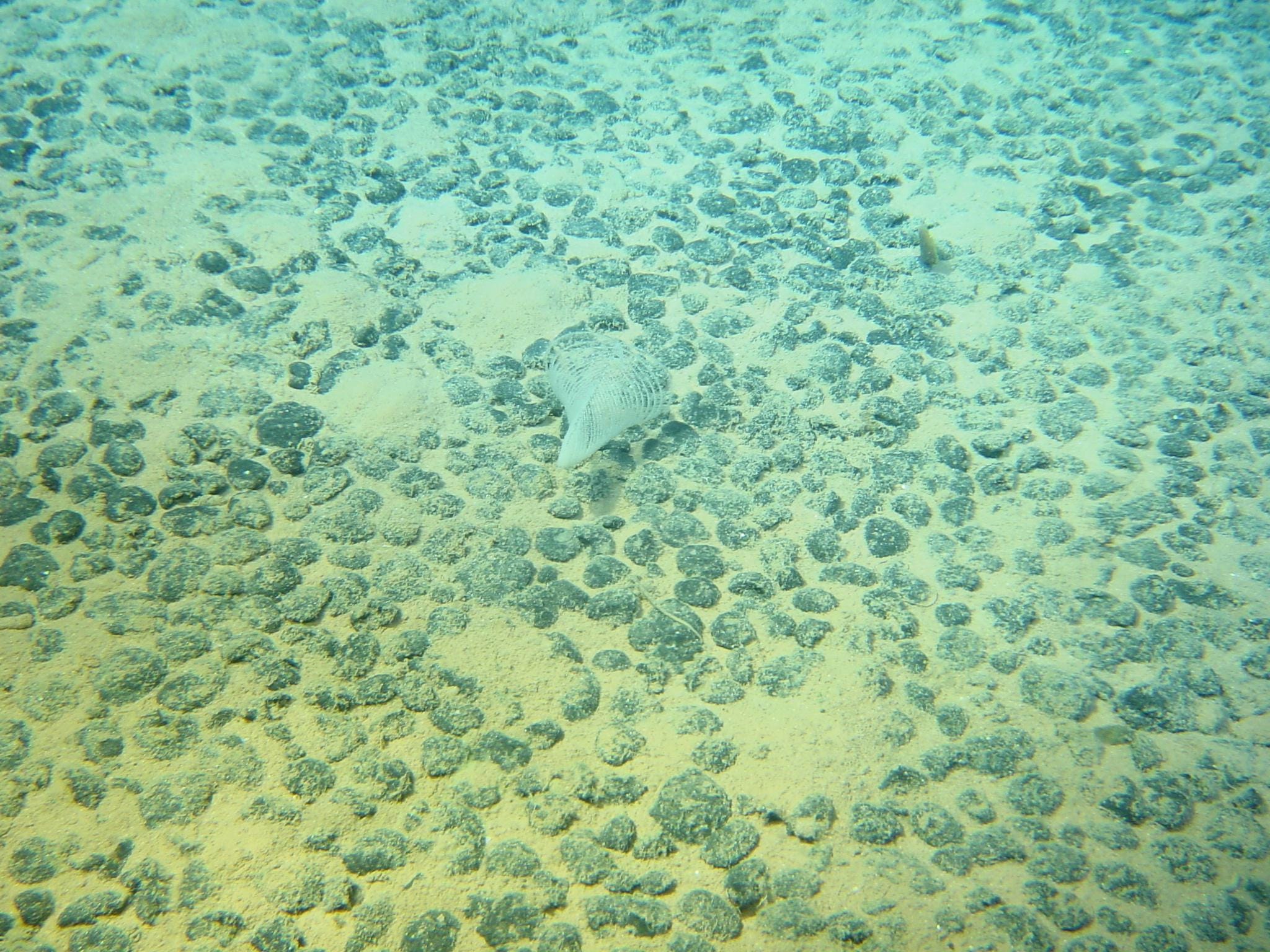
Information from these AI analyses can then inform deep sea mining decisions, such as by highlighting areas to protect from extraction. Some researchers and companies are also exploring AI as a way to map deep sea mineral deposits. And some deep sea miners have made AI an integral part of their plans for mineral extraction.
Impossible Metals, a US-based company, is developing mining robots equipped with AI that’s trained to recognize deep sea life. These robots (which haven’t yet been built or used at full commercial scale) are meant to hover above the seabed, using mechanical arms to pick up mineral-rich rocks. The AI cameras identify anything visible that’s not “seabed” or “mineral” as “life”. Then, the robots avoid picking up minerals with life on them.
As it depends on extremely innovative robotics, this plan has big technological challenges to navigate. But it has potential to protect some lifeforms during mining operations – at least those that are large enough to be detected. Even if a species isn’t yet described by science, the AI still has a good shot of recognizing it as “life”.
Meanwhile, The Metals Company, a multinational mining brand headquartered in Canada, plans to use AI in a “digital twin” of the deep sea. A digital twin is a virtual simulation of a place. In a deep sea simulation, AI can model how deep sea mining impacts the environment. TMC also plans to make the simulation accessible to others, allowing for oversight of mining operations.
But an effective digital twin, of course, requires extensive knowledge about the environment on which it’s based. If it’s built with limited or faulty information, those knowledge gaps could become risky, allowing decisions to be made based on incorrect understanding.
In a way, deep sea mining and AI share the same problem. Neither can work effectively without a great deal of accurate knowledge. And in the deep sea, knowledge is slow and difficult to collect. It’s remarkable how much humanity has learned about certain sections of deep ocean. Still, immense knowledge gaps remain. There are not only many new species, but entirely new types of ecosystems that we likely have yet to discover.
How much knowledge about the deep sea is enough? How can that information be used responsibly? As time goes by, we’ll continue to learn more about these environments, and make decisions about how to use or protect them. AI is already becoming part of that journey. But it will take human minds to answer the big questions raised in the process.
Thank you, Elise
Thanks - a useful exploration of AI with I think some useful healthy scepticism - and on that scepticism the organisation I work with wrote a report specifically around the concerns of TMC's & the application of its 'digital twin' technology - check it out here - https://dsm-campaign.org/wp-content/uploads/2024/10/DSMC-Briefing_Digital-Twin-WEB.pdf