News from Norway
A quick update from sunny Bergen
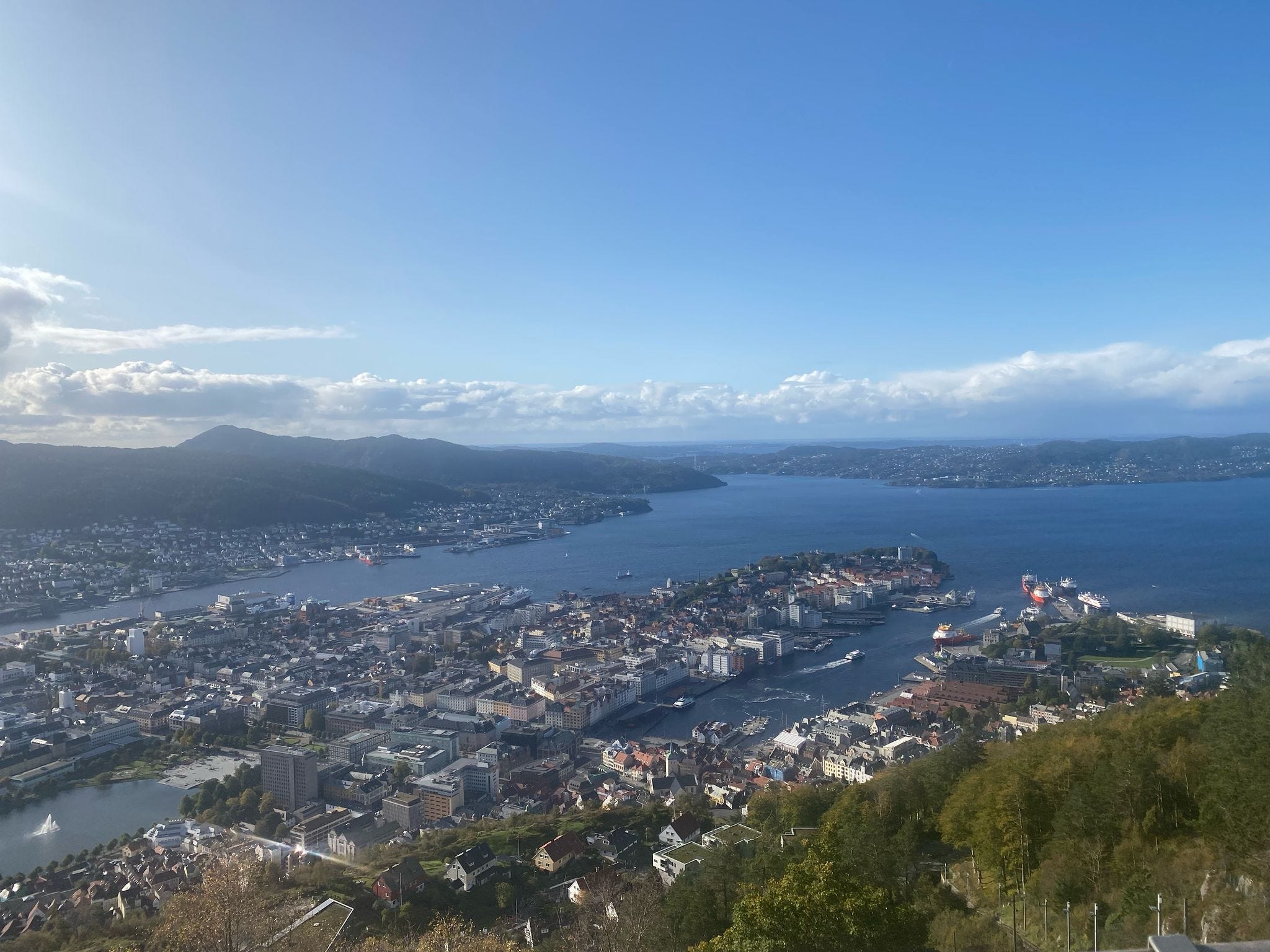
I’ve just come from the last day of the Deep Sea Minerals Conference: an annual-ish event in Bergen, Norway, all about deep sea mining.
It’s an event I enjoy attending. It may seem surprising that I, an environmental journalist, like to spend time with the deep sea mining crowd. But as a journalist, one of my main goals is to learn what plans deep sea miners have, and then share those plans with the public. Having friendly, open conversations with folks in the industry helps me do that. The conference brings lots of scientists, too – this time, an especially large number of geologists – with fascinating research to share. (They also say endearingly nerdy things, like “Sediments are cool!”)
I’ll have more to share later, once I’ve gone through all my notes (and caught up on sleep). But for now, here are some newsy items to note.
Norway’s deep sea mining exploration process is currently on hold: it was blocked last December by a small, environmentally-concerned political party. Still, there’s a good chance the process will get going again, after the country’s elections in September. In a presentation, Lars Erik Aamot of Norway’s Ministry of Energy said he expects the first round of mining exploration licensing to be announced in 2026. These exploration licenses would let companies do things like search for minerals and test mining equipment.

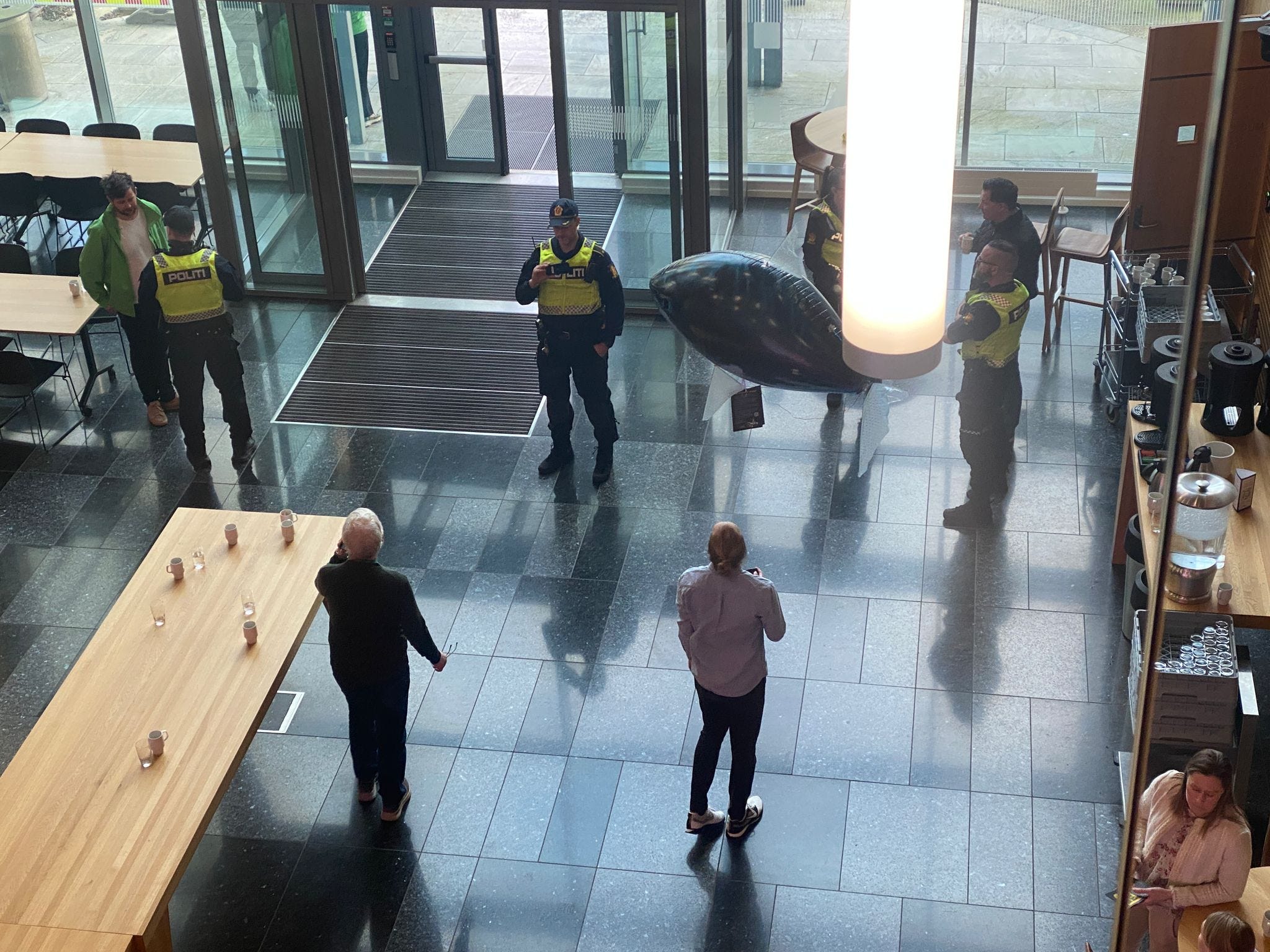
Greenpeace made its presence known, protesting both days of the conference. On the first day, they staged a “casino entrance” at the venue’s door, complete with balloons and signs that read “Stop Gambling with the Oceans.” It was pretty noninvasive – actually, it felt rather festive, as protests go.
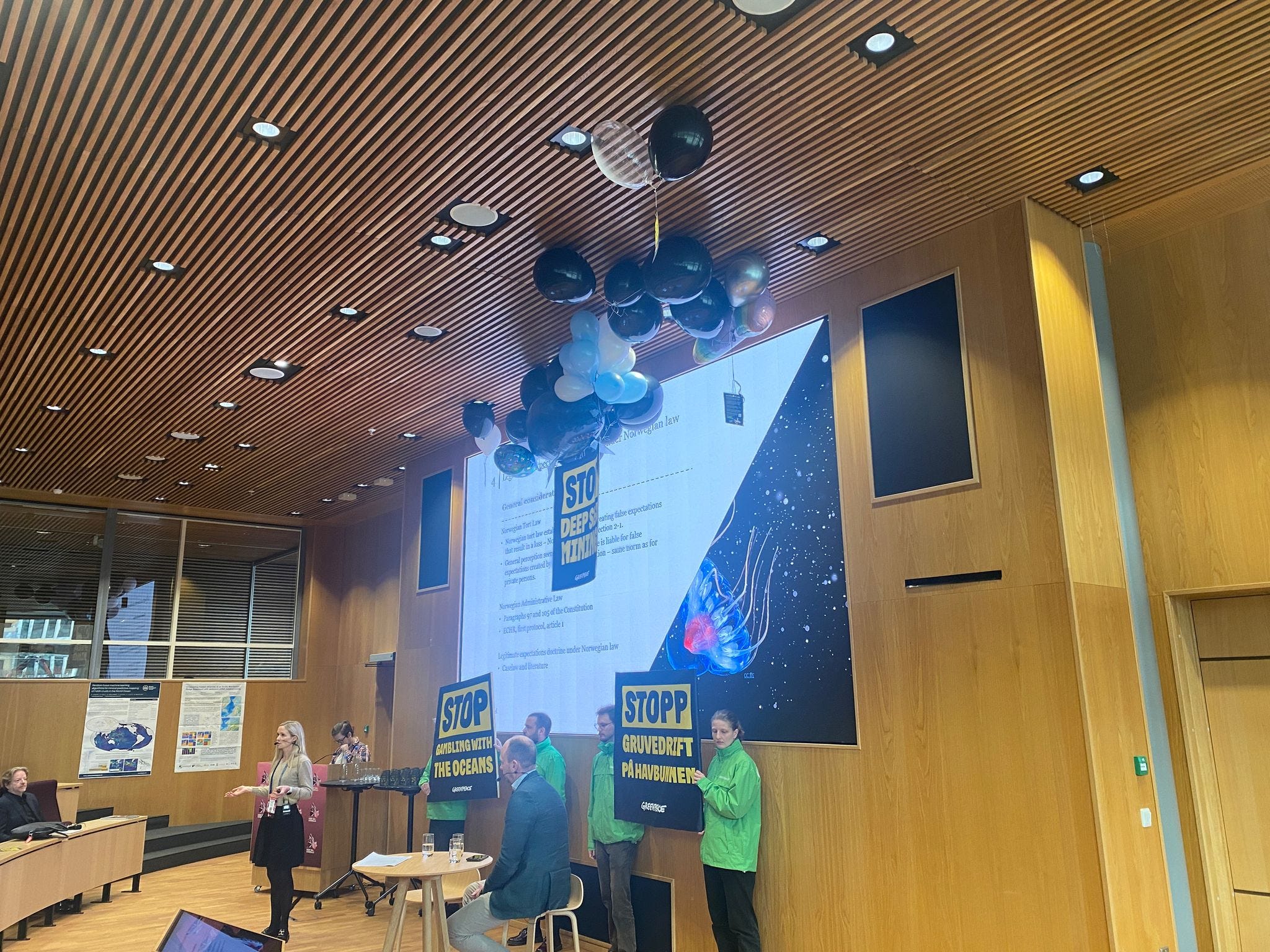
On the second day, the protesters entered the actual event, with a more targeted approach. I did laugh a bit when they started chanting “Stop deep sea mining!” during a very technical, and not particularly controversial, presentation on Norwegian law. While I support the right to protest, I wonder if there are better ways. For example, I’d have been interested in a side event where Greenpeace outlined their reasons for opposing deep sea mining.
Also, the waters of Norwegian deep sea mining have shifted a bit. Loke Marine Minerals – one of the country’s few deep sea mining brands – recently went bankrupt. It’s quite expensive to be a deep sea miner: they have to spend money on research and technology, but can’t profit by selling minerals, since commercial-scale deep sea mining isn’t yet allowed. Still, Norway’s other deep sea mining companies, including Green Minerals and Adepth Minerals, seem to be going strong. Adepth was well-represented at the conference, with their CEO and chief geoscientist both present.
One theme that kept arising during the conference days was uncertainty. Deep sea miners are trying to build an industry unlike any on Earth. Many questions remain unanswered. What, exactly, lives in the environments that may be mined? Which types of minerals, and how many, are down there? How do those mineral deposits form in the first place? For now, these questions are driving a lot of science, and a lot of conversation about what the future should look like.
Sincere thanks for the update, Elyse! A bit jealous of you visiting Norway in the springtime. Also, thanks for doing the work to report about what is going on in The Deep.