Predicting the Future
What's inevitable about deep sea mining?
Arguably, the International Seabed Authority, which oversees both deep sea mining and deep sea protection in international waters, should be a neutral regulatory force. But secretary-general Michael Lodge has long been a vocal supporter of seabed mining, which he calls “the slowest gold rush in history.”

Lodge’s pro-mining commentary continued in a recent interview with CNBC. Asked whether deep sea mining was merely a matter of time, he responded that on account of the high level of interest from companies and governments, “it seems to be inevitable.” (He also noted the vastness of seabed mineral resources, the growing global demand for metals, and the appeal of potential profits.)
This prediction would sound natural coming from a mining executive. But coming from the representative of a regulatory body, which should be as willing to reject mining applications as it is to accept them, it’s a bit more concerning.
It also may not be true. Decades ago, following the world’s first deep sea mining test in 1970, a group of scientists claimed that large-scale deep sea mining would begin in the “very near future.” Like Lodge, their prediction of mining’s imminent start was based on metal demand and possible profits.
And it proved wrong. Metal demand spiked in the ‘70s, then fell in the ‘80s. The world largely forgot about deep sea mining. Until recently.
Metal demand is high once more. Metals make electronics for consumers (smartphones, laptops), renewable energy projects (electric cars, wind turbines), and militaries (missiles, engines). But deep sea mining may fall into oblivion yet again, depending on what happens in the next few years. Demand could plummet, for example, if geopolitical tensions ease, or if new batteries that use less metal hit the market.
Of course, a lot more has been invested in deep sea mining today than ever before. The financial losses of abandoning it would be bigger than those of the ‘80s.
The gains would be harder to quantify: a chance for seabed environments to remain undisturbed.
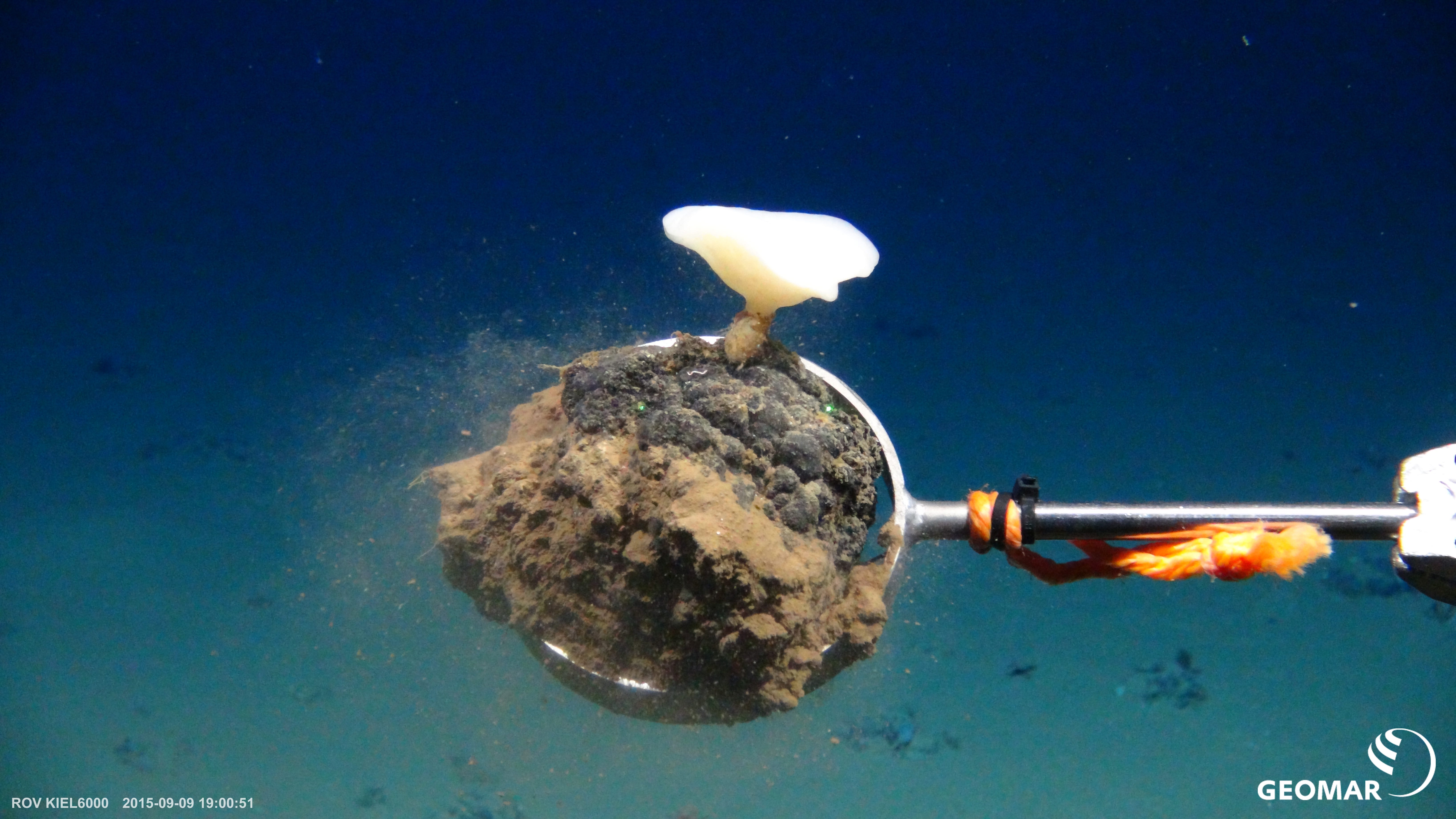
Deep sea mining has only ever happened in test form. But those tests suggest that ecosystems struggle to recover afterward. Scientists returning to a mining test site off the coast of Peru 26 years later found that it still had fewer suspension feeders (animals that eat food drifting in the water), and lower biological diversity overall.
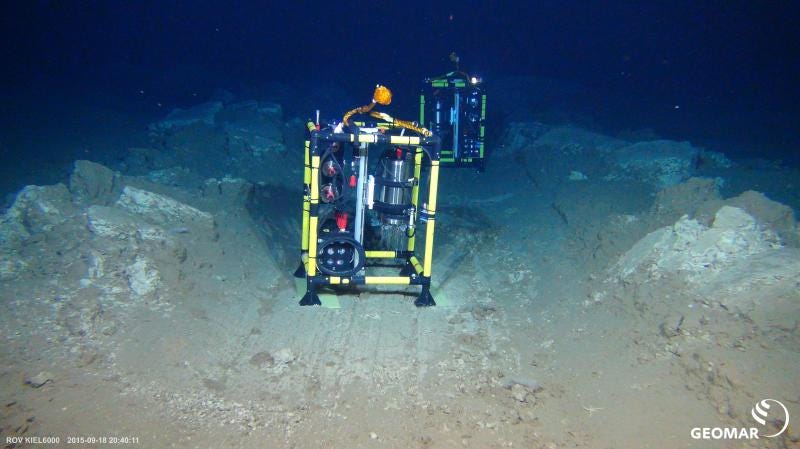
New scientific study of the first-ever deep sea mining test site (off the US coast in 1970) is starting to suggest similar impacts. There, mining vehicle tracks appear devoid of life to this day.
More research is needed to really get to know deep ocean ecosystems, and how mining could affect them. To that end, the UK just started a scientific network to study seabed mining’s potential impacts. But what we know so far implies that deep sea life often falters after mining.
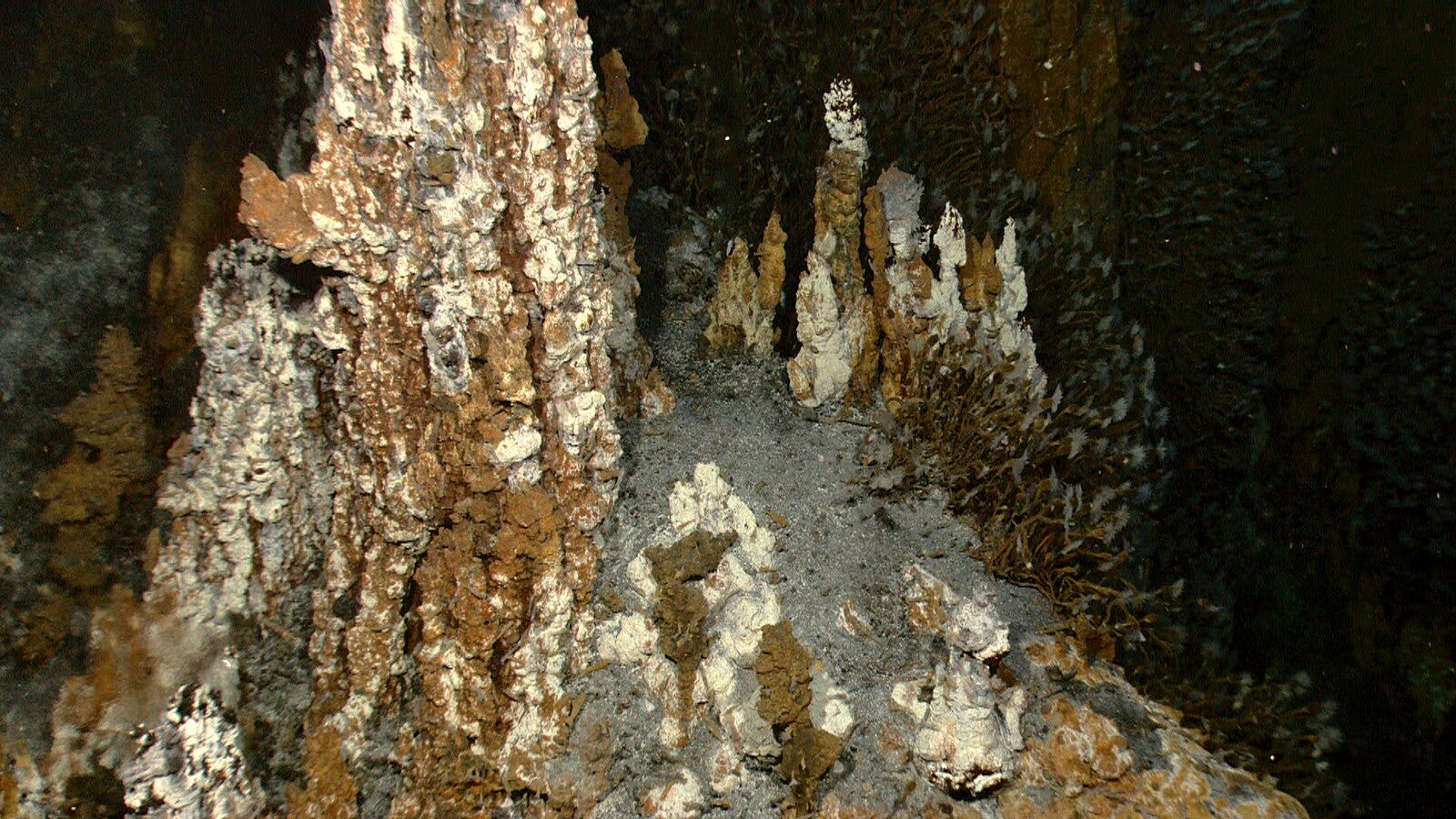
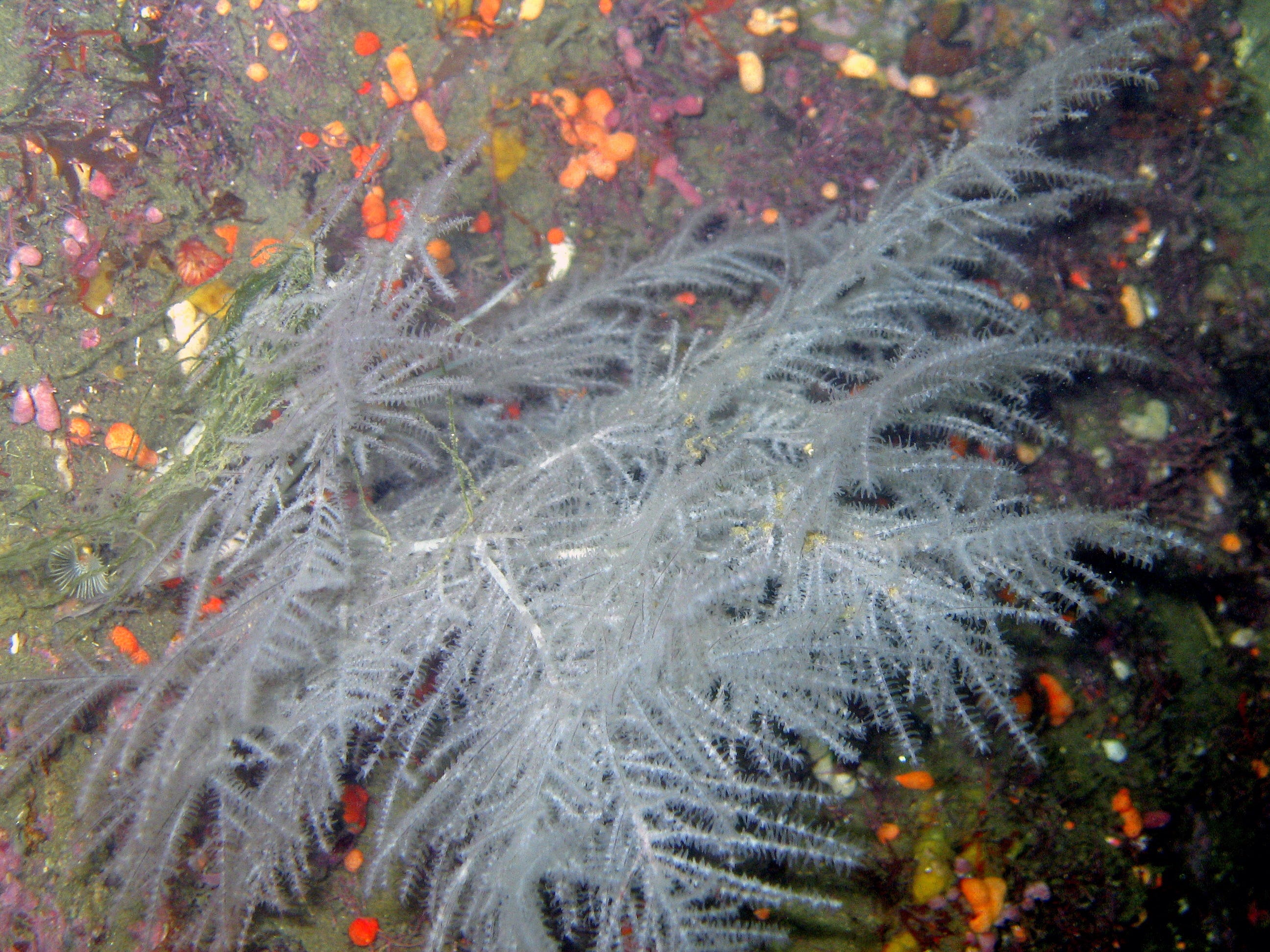
This makes sense, when you think about how deep sea life works. In extremely cold waters far from sunlight, there’s relatively little to feed on, and animals tend to grow slowly. Deepwater corals, for example, can be thousands of years old. These delicate and slow-growing ecosystems are unlikely to recover in timescales humans can measure.
Whether or not deep sea mining moves forward remains to be seen, in spite of Lodge’s comments. It depends on many variables: metal markets, geopolitical shifts, technological innovations. But if it does proceed, we can predict that it’s likely to leave behind sections of seabed that’ll never look quite the same.