The Big Questions
A chance to consider our collective priorities
Earlier this month, the latest International Seabed Authority (ISA) meeting concluded at its Jamaica headquarters. Its conclusion was far from conclusive: the debate on commercial mining regulations will keep going next year. More interestingly, though, that conclusion was delayed because the meeting got interrupted by a medium-sized earthquake.
As a lover of signs and symbols, it’s tempting to view the interrupting earthquake as a message from the Earth. But if I imagine an anthropomorphic Earth, I have to imagine that it wouldn’t care about deep sea mining. The planet is 4.5 billion years old. It spent millions of years without any life on it. It doesn’t need species, or oxygen, or oceans. We need those things.
We don’t yet know for sure what the impacts of deep sea mining could be. But perhaps the most important question is: will it harm things needed for human life (biodiversity, oxygen production, climate regulation), in order to get things needed for modern life (gadgets, electricity storage, high-tech weapons)? Given enough time, scientists can probably answer that question. But if deep sea mining begins on a wide scale before it’s answered, then we rush into the unknown, and face the consequences.
This concern is the impetus for a small protest currently unfolding in the Pacific. Activists from Greenpeace found their way onto a ship The Metals Company (TMC) is using for deep sea mining research. The protestors started in kayaks (“kayaktivists” is a fun portmanteau), preventing the ship from using its equipment in the water. Two of them eventually boarded the ship itself and set up shop on a crane, further blocking TMC from using equipment. The idea, it seems, is to keep the company from gathering the data it needs to submit a commercial mining application.
As research grows and nature documentaries proliferate, closeups of fantastic ocean life offer a compelling case for letting these environments be. It’s not easy to convince everyday people that deep sea mining is a good idea. A seabed mining conference I’m attending soon includes sessions on how to get a “social license” for mining. The industry is well aware of its public image challenges.
But protestors also face public image challenges. I often wonder what makes some protests compelling and others shrill. Why some are effective and others fall flat. Successful protest has a fantastic history of turning tides and getting things done, but it sometimes feels like we live in a world with more protest and less meaningful change than ever. It’s likely too early to say what the outcome of this particular protest will be, if there is any.
While the ISA deliberates and the protestors protest, Norway is considering opening its seabed for exploratory mining. The ISA has long issued exploration contracts, so businesses like TMC can test technology and gather environmental assessments. Norway’s exploration contracts would allow companies to do the same in Norwegian waters. Of course, no company wants to invest in super-expensive, high-tech testing if profits aren’t waiting around the corner. So, should the country open to mining exploration, commercial activity is expected to follow.
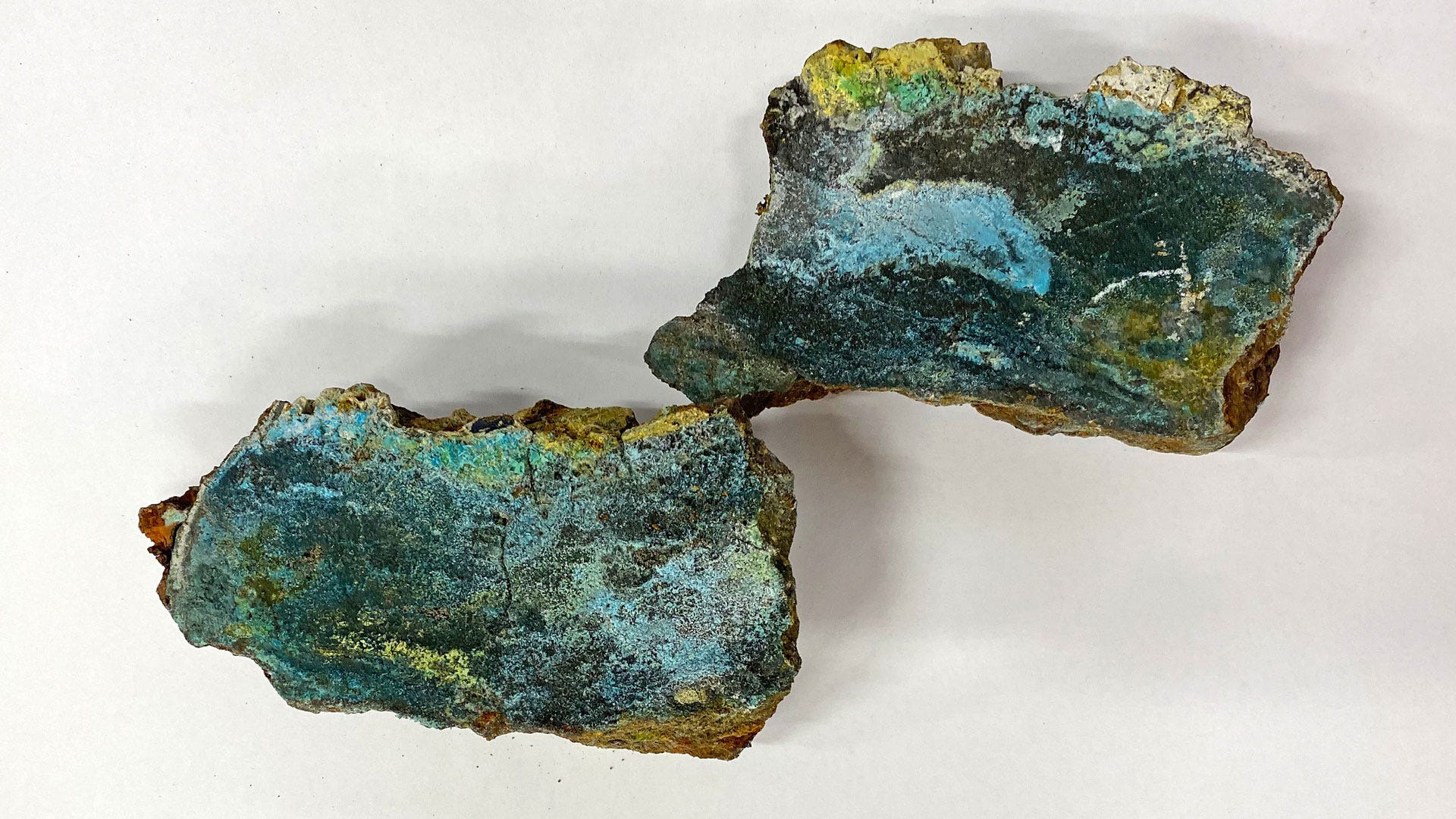
Both in Norway and around the world, this pursuit of deep sea mining hinges on the idea that minerals from the ocean are necessary. In a way, it’s true: new sources of mined minerals are probably necessary to continue modern society as it exists now. But what might a modern society that doesn’t need such a large supply of raw materials look like?
“Degrowth”, a fringe economic theory, offers one way to answer that question. The idea is that since Earth’s resources are finite, endless economic growth is by definition impossible. Instead, we should seek degrowth: intentionally and strategically shrinking economies. If we cut out what’s unnecessary or detrimental to society – say single-use plastics, fast fashion, even smartphones – we can reduce the need for raw materials, and make life generally better in the process.
Yet such changes can’t, and won’t, happen in a top-down way. No one wants a government to tell them to consume less. It’s change that must come from the people. Not just a few, but people en masse, if the change is to be meaningful.
Looking at it this way, such change seems incredibly unlikely. Still, in my personal conversations, I sense that people are increasingly disillusioned with modernity, in spite of the privileges it can offer. Living here is weird and stressful, an endless uncanny valley. Something feels off. Techno-optimism pushes ideas like deep sea mining and space mining as solutions, while the world’s problems seem increasingly nebulous and unsolvable. The desire for major, meaningful change is percolating just under the surface. I wonder what this could coalesce into.
From a geological perspective, humanity has lived on Earth for a mere blip. The world will keep spinning, in spite of what we do. But now’s a good time to think about how we want to spend our blip – and how long we want it to last.
Human consumption of raw materials is, on some level, required: we all need food, shelter, clothing. Yet overconsumption of raw materials stresses the planetary systems that make Earth livable. The time is coming to make a choice between those systems and the modern society that threatens them, and by extension, us. If we don’t choose actively, though – if we continue business as usual in the extractive society that capitalism has built – then the choice is made for us.