The Race Is On
Two North American companies vie for deep sea mining permits
Late last month, Canadian deep sea mining brand The Metals Company (TMC) announced that it would apply for US permits to mine the international seabed, bypassing international governance.
Now, US deep sea mining brand Impossible Metals has announced that it will also apply for US deep sea mining permits. Instead of the international seabed, though, it’s pursuing the national seabed around American Samoa, where the company believes significant metal deposits lie.
So, two North American companies are seeking US permits for deep sea mining. That’s about where the similarities end, though.
The permits would be issued by different US agencies, with different regulations for international versus national waters. TMC’s permitting process is overseen by the National Oceanic and Atmospheric Administration (NOAA). Impossible Metals’ is overseen by the Bureau of Ocean Energy Management (BOEM).
TMC’s mining technology is fairly far along, and the company has completed large-scale mining tests already. Impossible Metals’ technology is earlier in its development phase, with more scaling up to do before it’s ready for large mining tests.
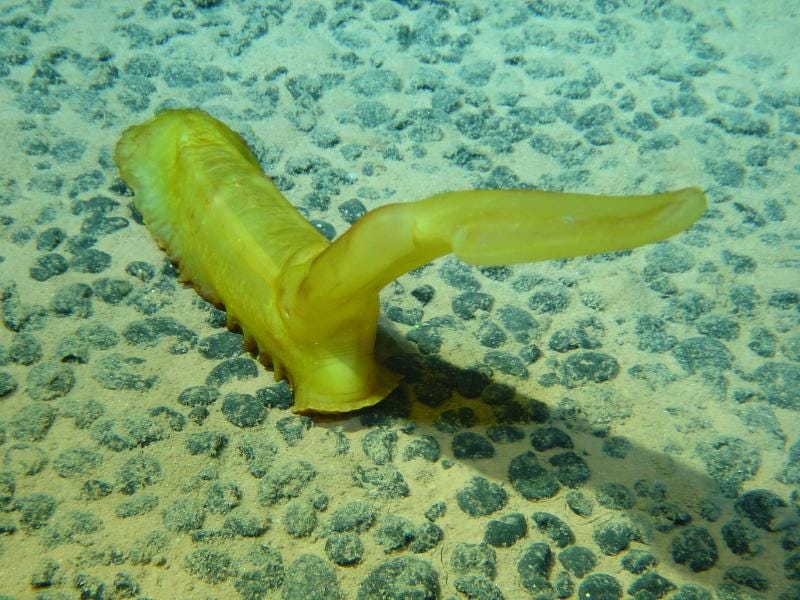
Neither company has its technology and systems fully lined up for commercial-scale mining yet – and the technology in question is quite different. TMC plans to use vacuum-like robots to suck up metallic rocks, along with a thin layer of seabed. Impossible Metals is working on a many-armed grabber to selectively pluck rocks from the surface, leaving the seabed and its larger lifeforms relatively intact.
This is also Impossible Metals’ second bid for the US seafloor. Impossible Metals applied for a BOEM permit before, but it ultimately stalled. As BOEM representative Brian Walch told me last August:
Regarding Impossible Metals’ unsolicited proposal for deep seabed mining offshore American Samoa, BOEM decided against initiating steps leading to the offering of [outer continental shelf] minerals for lease at this time. BOEM determined that further engagement with the government of American Samoa would be appropriate before any further action was taken.
BOEM’s schedule gives 45 days to either initiate steps toward a mining lease, or not initiate those steps. So, by about late May, Impossible Metals should know whether it’s moving forward this time.
For TMC, the waters ahead are a bit more uncharted. (Less charted?) Reportedly, the Trump administration is weighing an executive order that could fast-track US permits for deep sea mining in international waters. This might speed TMC along.
But if it issues permits for international waters, the US will face opposition from the UN-affiliated International Seabed Authority (ISA), which officially regulates international deep sea mining. The US has its own bespoke laws for mining the international seabed, but that doesn’t mean the rest of the world recognizes them as valid.

Then again, when it comes to mining its own seabed, the US may actually gain guidance from other countries – such as Norway. A 2020 Memorandum of Understanding between the two countries prioritizes sharing “information, experiences, best practices, and policy initiatives regarding offshore mineral activities,” as well as scientific and technological information about ocean minerals. In 2023, mineral cooperation press releases from both governments mentioned the continued hopes for seabed mineral extraction.
Different as the two countries are, their deep sea mining ambitions are certainly shared.
The deep sea’s mineral resources feel a bit like a pie right now. Countries and companies around the world all want a piece. Many are collaborating to increase their chances of getting a slice. But who will actually reach for it first – and, if they do, will somebody else slap their hand away?